

Technical Overview: STX90 Ionic Soil Stabilization
STX90 is a proprietary ionic solution designed to stabilize high-plasticity CH clays, common across the Texas Blackland Prairie. The treatment targets the molecular structure of expansive clay minerals to stop the swell-shrink cycle permanently.
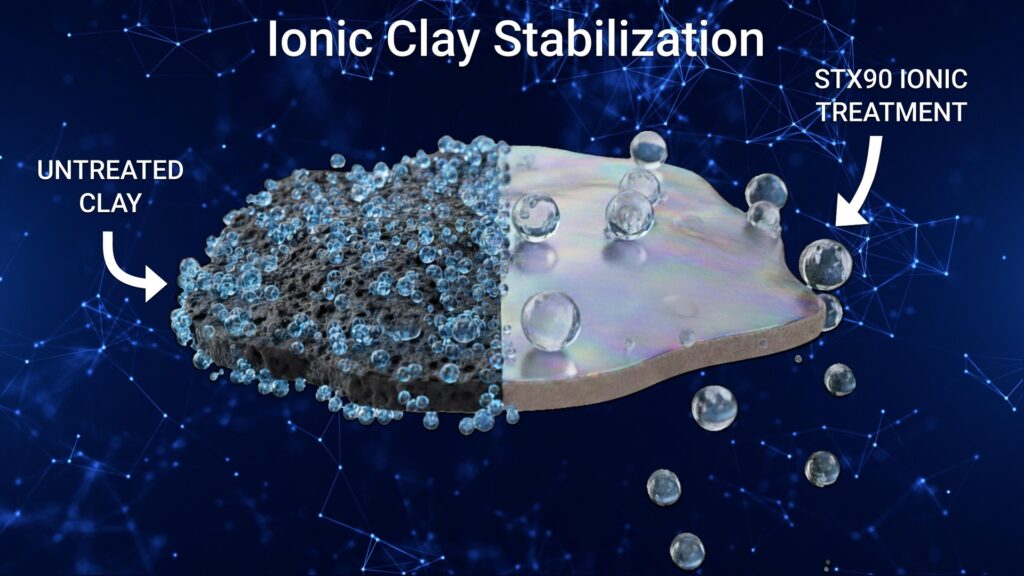
Ionic clay stabilization: How STX90 reduces the diffuse double layer and prevents soil expansion
1. Mechanism of Action: Molecular Polarity and Cation Exchange
Expansive clays, such as montmorillonite, carry a negative surface charge that attracts water molecules into the interlayer spacing. This creates a thick diffuse double layer (DDL), leading to significant volume change (swell). STX90 utilizes a combination of organic and inorganic acids to alter this state:
Cation Exchange
The solution releases hydrogen ions (H⁺) that displace metal cations like Na⁺ or Ca²⁺ on the clay surface. This reduces the DDL thickness, causing clay particles to aggregate (flocculation).
Interactions with the solution trigger the release of silicon (Si) and form stable complexes with aluminum (Al) and iron (Fe).
Insoluble Compound Formation
Phosphoric acid reacts with soil elements to form aluminum phosphate or calcium hydrogen phosphate. These water-insoluble compounds fill soil pores and cement particles together, increasing shear strength.
2. Validation and Engineering Properties
The application of STX90 results in measurable shifts in soil behavior verified through ASTM index testing:
Reduced Swell Potential
Phosphoric acid components have demonstrated free swell reduction in bentonite by 38.1% at an 8% dosage.
Plasticity Index (PI) Reduction
STX90 directly reduces the PI, moving soil toward a more stable classification.
Improved Shear Strength
The chemical modification increases cohesion and the internal friction angle of the soil mass.
Moisture Sensitivity
By reducing the active surface area of the clay fabric, the soil holds less water, minimizing volume changes during drought or heavy rain.
3. Application and Constraints
STX90 is delivered via deep pressure injection, typically reaching depths of up to 15 feet to treat the entire active zone.
Delivery
High-pressure rods inject the solution into the soil matrix around and beneath existing foundations or prior to new construction.
Target Minerals
The treatment is most effective on high-plasticity montmorillonite clays. Effectiveness varies on kaolinite or illite due to their different structural compositions.
Limitations
STX90 is a ground-improvement technique. It is not a "magic bullet" for structural failures caused by poor drainage or organic debris. Treatment effectiveness should be verified through site-specific PVR (Potential Vertical Rise) analysis and post-treatment monitoring.
Delivery Methods
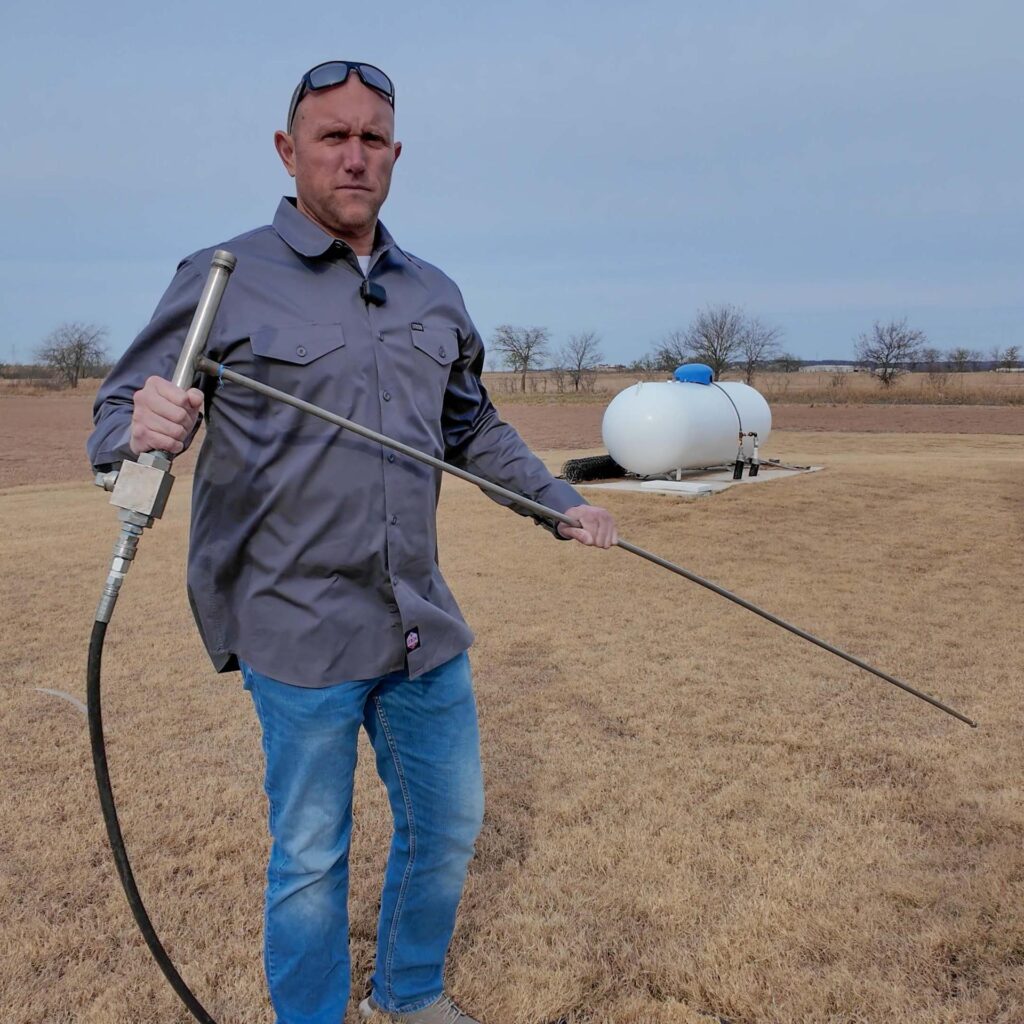
Hand injection for residential foundations
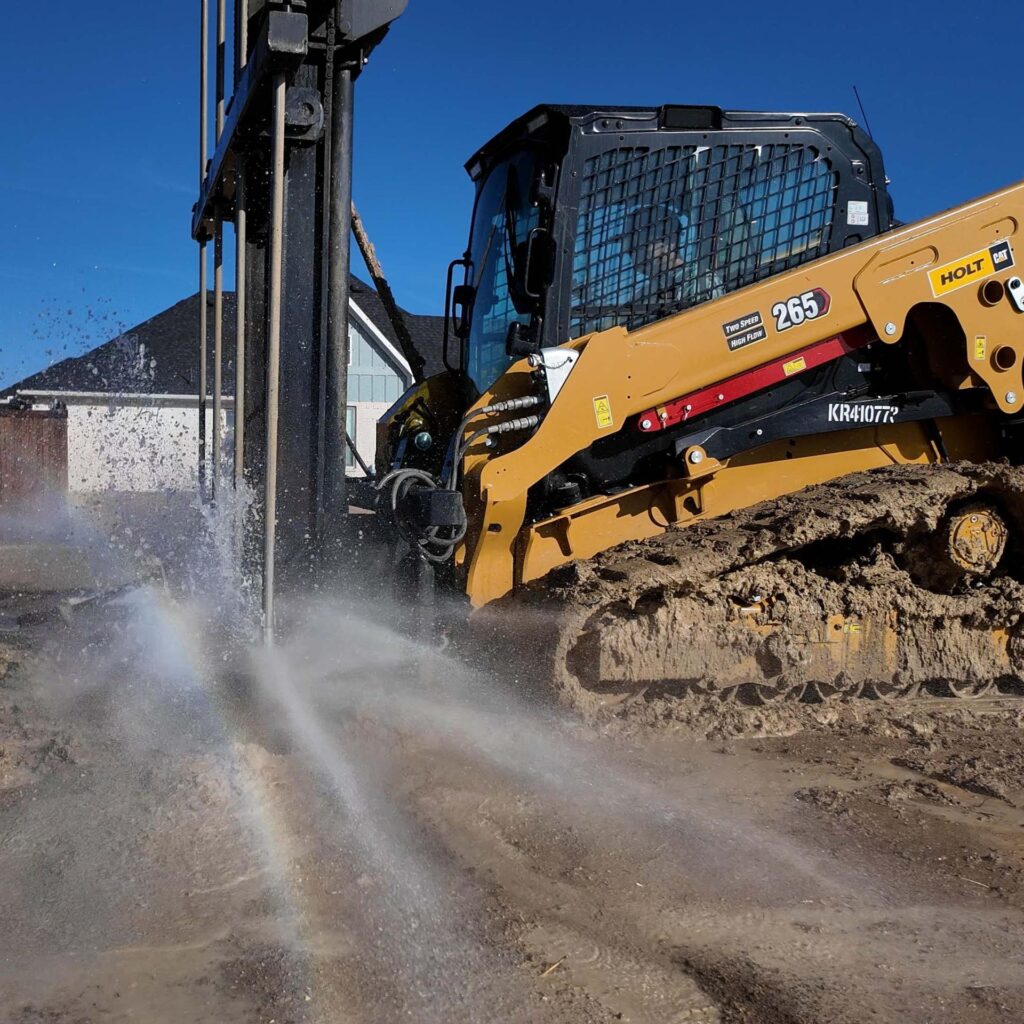
Tractor injection for new construction
STABILTECH: PERMANENT SOIL STABILIZATION
We solve the "Texas Clay" problem at the molecular level. In the Blackland Prairie, high-plasticity CH clays destroy foundations. StabilTech's STX90 ionic injection permanently stops the swell-shrink cycle and reduces Potential Vertical Rise (PVR) without excavation.
- Tech: Deep pressure injection (up to 15ft)
- Safety: Non-toxic, food-grade mineral solution
- Region: DFW, Austin, Houston, San Antonio