
This episode of Texas Build Lab features Freeman Bell and focuses on the realities of construction from the perspective of someone who has spent years building relationships, supplying materials, and watching projects succeed—or fail—based on what happens beneath the surface. From lumber distribution to soil stabilization, the conversation highlights how foundational decisions impact everything downstream.
Freeman’s experience spans multiple markets and roles, giving him a unique view into how builders operate, how problems develop, and where most people miss the mark. The discussion moves from real-world soil failures to modern stabilization techniques, offering practical insight into why understanding the ground itself is often more important than the structure sitting on top of it.
Industry Experience and Relationship-Driven Work
Freeman’s career started in lumber distribution, working directly with contractors and builders. Over time, that exposure created a deep understanding of how projects actually come together, where issues arise, and how strong relationships drive better outcomes across the construction process.
“I sell lumber to contractors… building houses, developed great relationships.”
Soil Problems Are Bigger Than Most People Realize
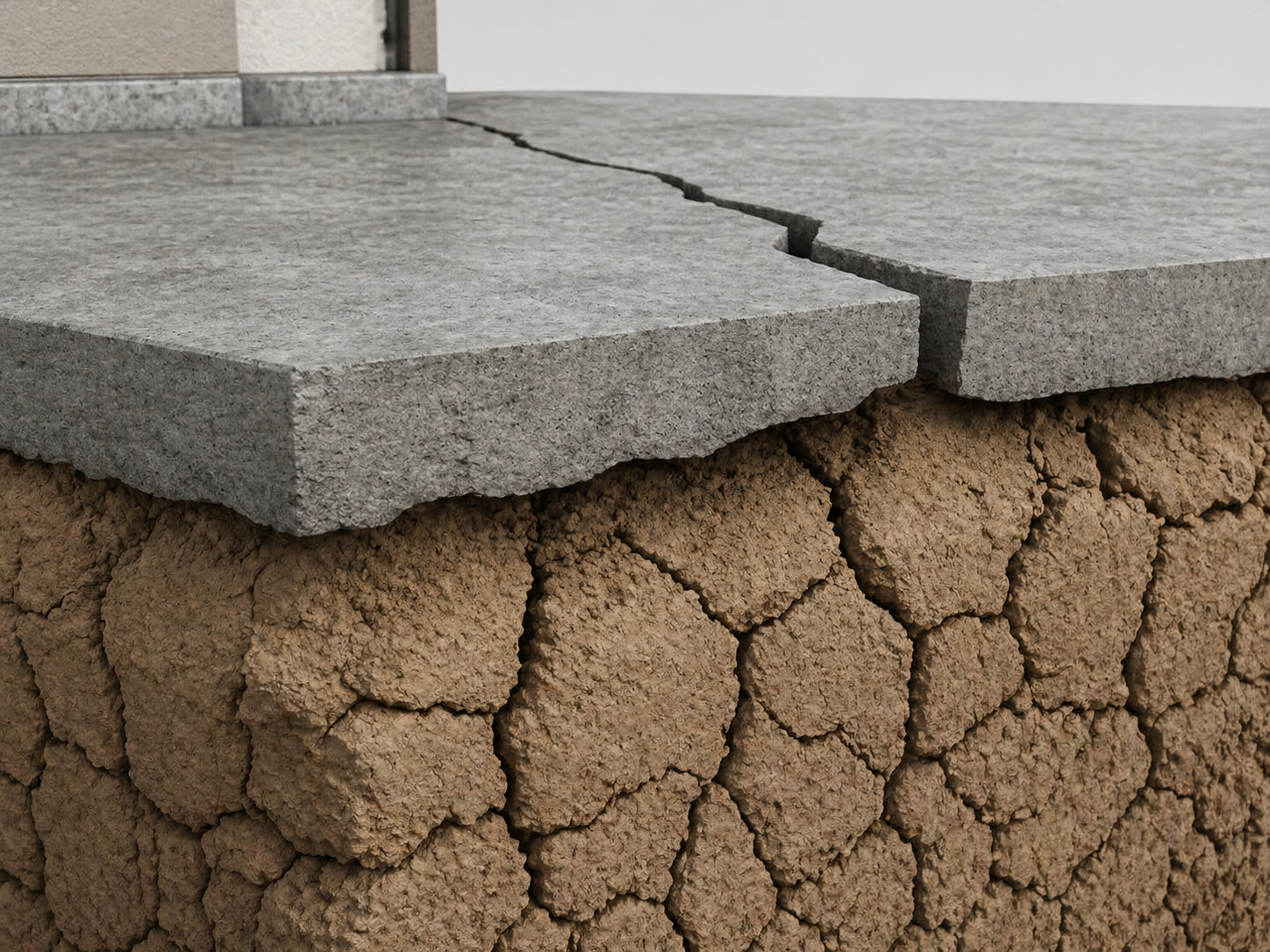
From New Mexico to Texas, Freeman has seen firsthand how expansive soils can destroy foundations. Cracking, shifting, and long-term structural issues often stem from soil behavior that isn’t fully understood or properly addressed during construction.
“Foundations all over… were cracking and breaking, and no one really knew what was going on.”
Traditional Methods Don’t Solve the Root Problem
Builders have historically relied on methods like select fill, piers, and post-tension slabs to manage soil movement. While these approaches help structurally, they often fail to address the underlying cause—expansive soil behavior driven by moisture and chemical composition.
“They were spending thousands… trying to keep that from happening, when they still weren’t solving the problem.”
Soil Stabilization as a Proactive Solution
Freeman’s transition into soil stabilization came from years of exposure to the problem. Modern approaches focus on treating the soil itself—removing expansion potential and creating a stable base before or after construction.
“You can take the heave and the expansion out of the soil and build on a solid foundation.”
The Science Behind Soil Behavior
Expansive soils react to moisture due to their chemical structure. By neutralizing the soil’s charge, stabilization prevents the swelling and shrinking cycle that leads to foundation damage—keeping the soil in a consistent, stable state.
“If you take that negative charge out… you can actually keep that soil in a neutral state.”
“Cheap Insurance” for Builders and Homeowners
One of the most practical takeaways is the concept of soil stabilization as insurance. Compared to the cost of foundation repairs, stabilizing soil upfront significantly reduces long-term risk and warranty issues.
“It’s cheap insurance for building homes.”
Modern Techniques: Injection Methods
Today’s stabilization methods include both large-scale tractor injection and targeted hand injection. These approaches allow builders to treat soil deeply and consistently, even adjusting for changes during construction or addressing issues in existing homes.
“You actually have to saturate the soil… and then the chemical changes the molecular structure of the soil.”
About Freeman Bell
Freeman Bell brings a relationship-driven, field-informed perspective to construction, development, and material supply. With experience spanning lumber distribution and soil stabilization, he offers practical insight into how foundational decisions impact long-term outcomes in the built environment.
Read Full Transcript

0:00 Introduction to Texas Build Lab
Tim Miller: Okay. So we’re—this is our, I think, this is our third episode of Texas Build Lab. And the reasoning behind this podcast is sponsored by Stable Tech Soil Stabilization.
The objective of the podcast is to help create relationships with other people in the industry, in the construction industry, whether that’s architects, engineers, geotech builders, custom home builders, developers, anyone that’s associated with the building industry in general. And so, I’m here with Freeman Bell.
0:37 Freeman Bell’s Career Background
Tim Miller: You’ve been in—I’m going to probably botch this up—but you’re in the lumber distribution side of things. Is that right?
Freeman Bell: That’s correct. I mean, I sell lumber to contractors. I started my career out in New Mexico working for a company called Foxworth-Galbraith Lumber Company, and then later on transferred from New Mexico to the Dallas market.
Tim Miller: How long ago was that?
Freeman Bell: I moved from New Mexico to Dallas in 2014.
Tim Miller: But I mean, when did you start in the industry?
Freeman Bell: I started in the industry in 2012.
Tim Miller: 2012. Okay. So that’s a long time. So a couple of quick questions there: from 2012 to—well, we’re 14 years later—what have you seen different with the industry as far as maybe logistics, technology, anything that’s different from then to now, or is it the same?
1:44 Soil Challenges in New Mexico
Freeman Bell: That’s pretty much the same. But I will tell you that in starting my career in New Mexico, selling lumber to contractors building houses, I developed great relationships. The thing I found out there, they have horrible problems with the soil in New Mexico. Foundations all over—I lived in Roswell—foundations all over Roswell, New Mexico were cracking and breaking, and no one really knew what was going on. And so they would do all of these things.
You would actually have to dig out dirt so many feet down and put back layers of dirt, of select fill in lifts—like six-inch lifts—and then wet it down, pack it, and do it again to try to get a stable foundation. Now fast forward to that, and we can get into that in coming to the Dallas market. I was able to find out there’s other things you can do with the soil.
2:45 Expansive Soils in Texas
Tim Miller: Well, and that’s really funny because from what I know about expansive soil in Texas, there is this area that’s called, I think it’s called a prairie land. There’s like a big area from all the way up in Oklahoma and Texas—prairie land soil—all the way down into San Antonio and even further into Houston. It’s a big wide area where the soil is super expansive, but I actually didn’t know that a similar problem was out in New Mexico, which is pretty far away.
Freeman Bell: And the soil in New Mexico is maybe some of the worst soil that I’ve ever seen. I’ve often thought, now that I’m in the business here in Texas, I’ve thought about going back out and doing some studies. I’ve got contractor friends that are still there doing work. I think that it would be a nice trial for us to go out there and do some sampling and do some testing just to actually further our business and the study of what we do.
3:48 Transition to Soil Stabilization
Tim Miller: We’re going to fast forward to our current time. You’ve been doing a similar thing with lumber out here, building relationships with all kinds of developers and builders. And now you have dovetailed into soil stabilization. Do you want to talk about that? I mean, it kind of talks about the issue you’re just talking about.
Freeman Bell: Oh, absolutely. So yeah, I’m in the lumber business; that is my main job. I got involved in soil stabilization about a year ago. I started really about a year ago, but for the last ten or 11 years, I’ve been exposed to it and learning about it with some friends, and just learning about the expansive soil and how you can take the heave and the expansion out of the soil and build on a solid foundation that’s not going to swell or heave when it’s a drought or when it rains. It’s pretty interesting.
4:56 History of Residential Stabilization
Freeman Bell: It’s quite remarkable. And I’m surprised that it’s—and I know it’s used in other states and stuff—but like I say, it’s in New Mexico. I can’t tell you the number of foundations that I would look at that were just crumbling because the soil was just so bad and expansive. There’s a lot of clay. And when the clay gets wet, it just swells. It’s very expansive. They’re starting to get into that out there and understand it, but they would be spending thousands and thousands of dollars on their foundations to try to keep that with piers and things like that, and they still weren’t solving the problem.
Tim Miller: I would guess that the soil in New Mexico is different than the soil here. So if I was going to do soil stabilization in New Mexico, I might have to go back to the lab and figure out the sweet source of the solution that’s used.
Freeman Bell: Absolutely. It’s all about the chemical that you mix to put into the ground to keep it from swelling.
6:16 Evolution of Foundation Technology
Tim Miller: So you’ve been in the business for a while and you know a lot of builders. Something that amazes me is that soil stabilization has only been around in the industry for maybe 30 years, maybe a little longer than that, as far as building residential homes. I just can’t imagine where we would be without that. I mean, homes are going up everywhere. Every single city in the country is expanding, right? And in Texas, we were pretty fortunate here. The economy is doing fairly well. Obviously there’s fluctuations, but there’s still houses going up everywhere.
Without that little bit of insurance stabilizing the soil, it’s almost a crapshoot. I was told one time when we built our house out here in Roanoke, there was a crack in it right after it was poured. Brand new house. I asked the builder and said, “Hey, what do we do about the crack?” And she said, “Well, here’s the deal: you’re in Texas. If you don’t want cracks, don’t pour a foundation.” And that was the extent of that. Our house has been out for 23 or 25 years now. So even back then, we were still doing soil stabilization, but it’s not super—
7:49 Monolithic Slabs vs. Post-Tension
Freeman Bell: Back then, the way they were doing soil stabilization was just trying to beef up footers around the house. Years ago when the foundations were monolithic, you’d have a poured monolithic slab.
Tim Miller: What does that mean?
Freeman Bell: That’s basically a slab that sets over the top of the ground and has a foundation that goes down. It’s a single pour and has some rebar and stuff in it. But now, fast forward years, and the biggest thing to try to keep slabs together now is post-tension. In a post-tension slab, you have cables running through it. When you pour the slab, you’ve got all these cables. They will tension the cables the day after it’s poured. And then in a few days or a week or two, they’ll come back and put full tension. Each one of these cables is cinched tight to basically keep that slab together as it moves, because soil is so expansive and you’ll get heaving when it rains and droughts when it dries out.
9:04 The Science of Soil Chemistry
Freeman Bell: Fast forward from that, and they started looking at the science of the soil. You could take the negative charge out of the soil with a chemical. What happens is the water platelets stack on each other, and that causes the soil to expand. So if you take that negative charge out of that with chemical, you can actually keep that soil in a neutral state.
It’s a lot like a sponge. Everybody knows what a sponge is. When a sponge sits on the sink for too long, it just crumples up and dries up, and then if you wet it, it returns to its natural state; it doesn’t really swell. Same thing with soil. If you take the negative charge out of the soil, then the platelets don’t stack. You basically render that soil in its natural state. It doesn’t shrink up; it just stays in that normal state where the sponge is not swelling. It’s just there. When you do that, you really take the problems with soil and the foundation out of the equation. It’s cheap insurance for building homes.
10:24 Foundation Warranty and Injection Accuracy
Freeman Bell: We have customers that have been doing soil stabilization for years, and their warranty work on foundations is basically zero. Occasionally they’ll have one that moves and they may have to come back and hand inject around a certain area. A lot of times that’s just because the house was moved—not that it moved on its own, but when they said the house is going to be built in this spot here, the homeowners decide they’d like it turned a little bit or moved. And so they actually move it over the line where the soil was not injected. Then you do have a problem with that part moving on you. If that happens, you can come back and hand inject the soil and stabilize it after the fact.
11:15 Hand Injection vs. Tractor Injection
Tim Miller: Let’s talk about existing homes. For the longest time, I had no idea that soil stabilization was even out there. I can guarantee you many people in the country who have homes with foundation issues have that same level of knowledge. You talked about hand injection; that is after a house has been built and over years has had some foundation problems. What are the different types of injections that there are?
Freeman Bell: Well, you’re right and you’re wrong on hand injection. Hand injection is done in multiple ways. There are reasons to do hand injection on a new build—for example, a lot of hand injection is done for pool bellies.
Tim Miller: Because you can’t get a skid steer in there.
Freeman Bell: Exactly. You can’t get a skid steer in there. But hand injection is mainly done on small jobs or if you’re trying to stop a house that’s already moving that was built without soil stabilization. You want to go in and stabilize the soil before you repair the foundation. The main part of injection that we do is tractor injection. We have a tractor—a big skid steer—and it’s got rods that go anywhere from 10 to 15 feet into the ground. They’ve got water pressure going through the rods as they go down. They’ll stop at intervals and completely saturate the soil. If you don’t saturate the soil first, there’s no sense putting the chemical in it. You actually have to swell the soil to its potential vertical rise, and then you add the chemical to it. The chemical is what neutralizes and changes the molecular structure of the soil so it stays in that state.
13:25 Geotech Reports and PVR
Tim Miller: 15 feet, that’s very deep. That’s like from here to the roof.
Freeman Bell: Yeah. The geotech engineers are the ones who tell us where the expansive soil is. They’ll come out and do borings on a property. Most injections go down ten feet, but they’ll tell us where the layers are that are bad. In the report, it tells you what layers they’re finding. There are different types of soil too, so you have to look at your chemical and change your mix occasionally for different types of soil. You can use hand injection for small jobs so you don’t have to bring a rig out. You use a tank, mix the solution, and drive it. The largest rods we have for hand injection are ten feet. We have a self-contained tank that pulls onto the property, and it’s like a big pressure washer with a ten-foot rod and a nozzle. You start the water flow and it drives itself into the ground as you shoot chemical and water down until the soil is saturated.
15:26 Fixing Foundation Issues Permanently
Tim Miller: For existing homes that have structural issues, how do you know if you’re a good candidate for chemical injection as opposed to just getting your foundation fixed? A lot of people don’t know.
Freeman Bell: You would need an engineer or a foundation company to come out and look. We are not a foundation company. But if you just have a foundation company come out and all they do is jack the house up and put piers underneath it, you’re not fixing the problem. You need to stabilize the soil before you do that. We work with a number of foundation companies. We go out and stabilize, and then they will put the piers in and jack the foundation back into place and backfill it.
Tim Miller: How would you know if you don’t need foundation repair but you have some issues? For instance, if I see cracks or a line of paint chips all the way to the roof. Where is the delineation?
Freeman Bell: Usually foundation repair is for very large cracks. But you can have movement that just soil stabilization would fix. I had a house in Raleigh when I first moved to Texas, and over time the expansion joint in the center of the house got big enough that you could stick your hand in it. It was crazy. Through a friend, I found out about soil injection. They injected around the perimeter and, over a period of a few weeks of keeping the moisture in the soil and letting it swell up, it went back together. That doesn’t happen all the time, but once you stabilize the soil, any foundation work you do will be a permanent, long-term fix.
18:38 Concrete Malleability and Elevation
Tim Miller: Someone was describing a topographical test where they match the elevation throughout the house to see the delta between different areas. The thing that surprised me was that it was all over the place; it wasn’t just one side higher than the other. When I talked to a structural engineer, they said that while concrete feels hard, on a large scale it is malleable and does move around.
Freeman Bell: That’s correct. I’ve actually seen jobs where the center of the house has sunken so much that if you poured water in there, you would have six inches of water sitting in the center. I’ve seen it where you drill holes and start a drip system to swell that back up to level. You wouldn’t think concrete is malleable, but you can bring it back up. You need a structural engineer for a project like that because you have to worry about the pipes under the house. You don’t want to cause plumbing problems by moving the soil. But I’ve literally seen houses shaped like a bowl swell back up and, with the chemical mix, stabilize the foundation for a permanent fix.
21:05 Potential Vertical Rise (PVR) Explained
Tim Miller: You used the term “potential vertical rise.” Can you explain what that means in relation to clay and foundations?
Freeman Bell: It’s just the percentage of rise as clay gets wet and the water platelets stack on each other. It just swells. The worst I’ve seen here in Texas is about 14 inches. So in a drought state where we haven’t had rain and then suddenly we get a lot of it, that soil can expand 14 inches. As it’s expanding, it’s not only going up; it’s going out. It pushes on the beams underneath the foundation. I have seen it actually push a foundation apart and cause cracks. That’s why it’s very important to look at your geotech reports. It’s cheap insurance to stabilize the soil up front and have a foundation that lasts a lifetime.
22:30 Conclusion and Final Thoughts
Tim Miller: Is there any final word of wisdom you have for builders or homeowners?
Freeman Bell: I would just say it’s cheap insurance. It’s not a lot of money to inject the soil, but you will have a solid foundation and you will not have warranty problems down the road. Some engineers over-engineer the slab because of expansive soil, but even then, there are problems. If you do the work up front, you have a quality product you can rest easy on. Builders and homeowners own that slab for years to come, and if there’s a problem, it comes back on you. You can inject the soil and have a test done afterward to show that the vertical rise has been taken out of the soil—down to as little as 1%.
Tim Miller: How do they test the soil afterward?
Freeman Bell: They do borings—basically a core sample 10 to 12 feet deep. They take that soil and examine it every so many feet to determine the PVR.
Tim Miller: That’s cool. Freeman, this has been fun. I appreciate you coming out.
Freeman Bell: Oh, absolutely. Enjoyed it.